








How to Improve AI Visibility [3 Strategic Approaches]

AI is transforming how people search for information to address their queries. Why? AI loads the user’s intent instantly, and users don’t like long pages.
To keep up with this trend, improve your AI visibility with these 3 strategic approaches. Strengthen your content structure, make content that answers intent directly, and align with AI-friendly formats.
This guide shows you how to structure, speed up, and optimize your content so AI search tools prioritize your brand.
So, let’s dig into how to improve AI visibility!
vista rápida
AI visibility refers to a content or brand being cited, referenced, or summarized as part of the AI-powered search results, like ChatGPT and the like. It is influenced by various factors:
✅ Original content and fresh information with structured data
✅ Pages with citations, quotes, and statistics
✅ Strong brand presence across the web
Apply strategic approaches to improve AI visibility:
✔️ On-Page Approach
1. Research topics AI frequently cites and writes AI-friendly content with bios, case studies, and real-life experience.
2. Update content and incorporate comparison if applicable to regain citations.
✔️ Off-Page Approach
1. Analyze competitors to find citation gaps you can fill and share helpful insights in UGC forums.
✔️ Technical Approach
1. Fix broken pages and ensure content is accessible for AI crawlers.
2. Avoid heavy JavaScript on key pages to improve site speed for better AI understanding and extraction.
AI Visibility and Its Importance
AI visibility refers to how easily AI models like ChatGPT and Claude can find, interpret, and reference your content. In other words, it’s the ability of a content to appear in AI-generated answers, AI overviews, summaries, citations, topic overviews, conversational results, and sources or reference links.
Moreover, brands that optimize for AI visibility can gain more organic exposure, citations and backlinks, and trust and authority. These brands also get higher traffic from AI-powered search tools and have better recognition as expert sources.
Imagine, more than half of the population now uses AI, and 66% of them use AI regularly. So, if your content appears 10% to 20% of their total searches, that’s a solid visibility already. This makes your content a reliable source of information.
Additionally, AI-powered search converts much higher compared to traditional search. This is because AI search results provide recommendations, instant, and relevant answers. This makes the user’s judgment and decision-making fast.
Factors Influencing AI Visibility
AI visibility is a new trend in SEO, and we are still in the early stages of understanding what affects it. But there was already evidence that these factors have a strong influence on why a certain content is being cited.
1. Quality and Originality of Content
AI tools prefer content that is most trustworthy and authoritative. These are contents that show real experience, expertise, strong opinions, etc.
2. Citation, Quotes, and Statistics
AI is very meticulous when searching for an answer to a certain query. It scans and looks for content that includes evidence like case studies and a quote from an expert, and numbers like data and statistics.
3. Brand Mentions
The brand that appears and is mentioned most across the web has a higher chance that it will be cited by AI in the search queries. This means that AI recognizes your brand as trustworthy and authoritative.
4. Structured Data
An AI system prefers content with structured data. Schema gives LLMs a clearer context. Useful schema types include article, FAQ, how-to, review, etc.
5. Up-to-Date Content
AI models strongly favor updated content, especially for time-sensitive and trending queries. This is because AI is pre-trained to avoid confusing and obsolete information.
3 Strategic Approaches to Improve AI Visibility
On-Page Strategies
On-page SEO is what makes your content easily understandable by search engines and AI-powered engines.
1. Research topics that are most cited by AI
You notice that your competitors are performing better than your website. Of course! It only means that they are doing well in on-page SEO. You can conduct a competitor analysis to identify which pages or contents they are doing great. Once you identify them, you can check your own website to see if you are covering the same topic.
Now, determine if those topics are considered most cited by AI. You can use AI tools to ask questions, like “What are your sources for this topic?” and “Which websites do you commonly cite for [topic]?”
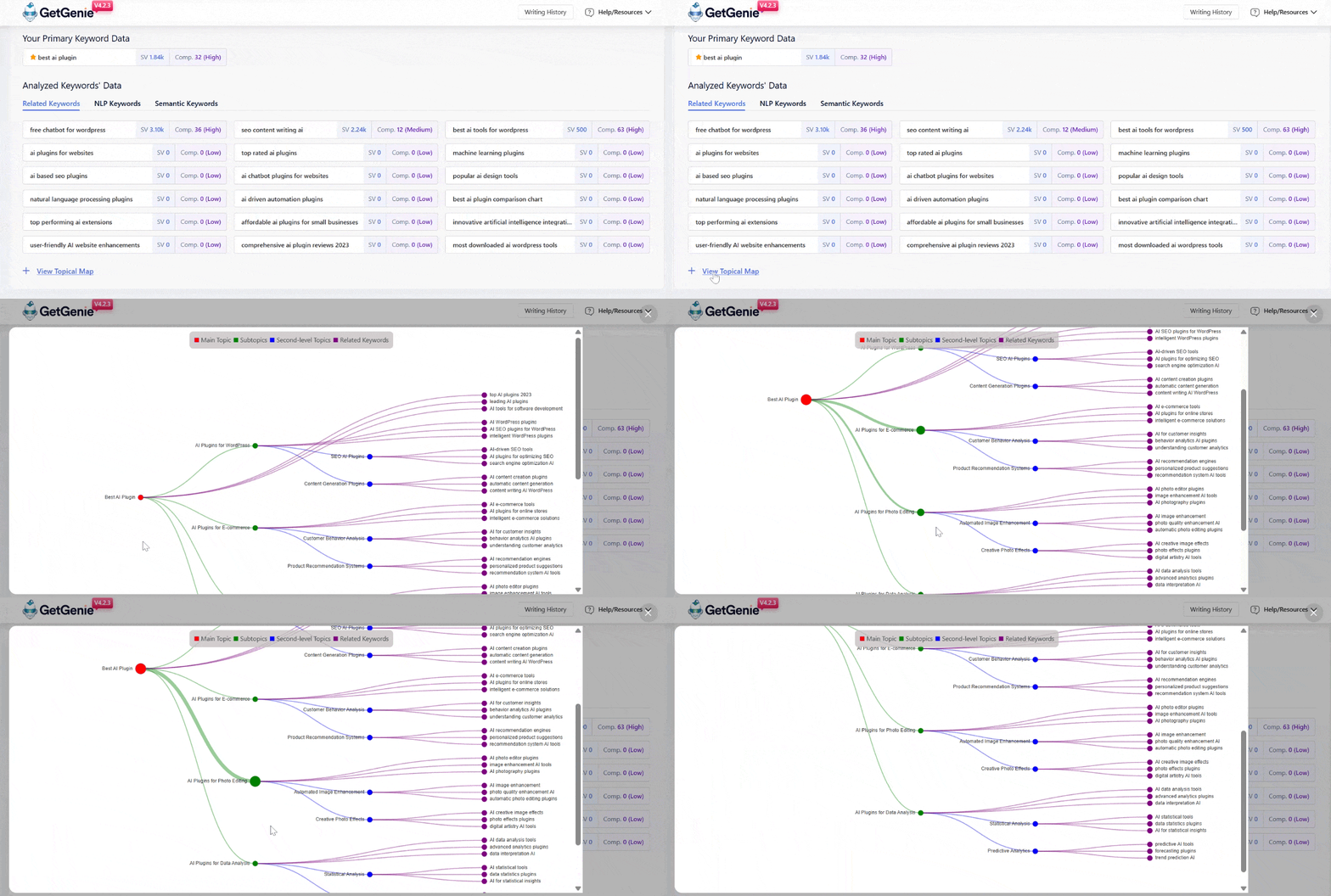
If the results show that those topics are getting citations, proceed to identify sub-topics and related concepts. You can use GetGenie’s keyword research feature to create a topical map. This topical map can help you create content with hierarchical information.
2. Update evergreen content
AI hates outdated content, as it loses visibility fast. Modern AI systems favor sources that include fresh data, updated examples, and recent case studies.
Find your evergreen content and update it to regain citations. Make sure that the contents are updated at least once every 3 months. You can add updated statistics, recent case studies, updated screenshots, and even revised strategies.
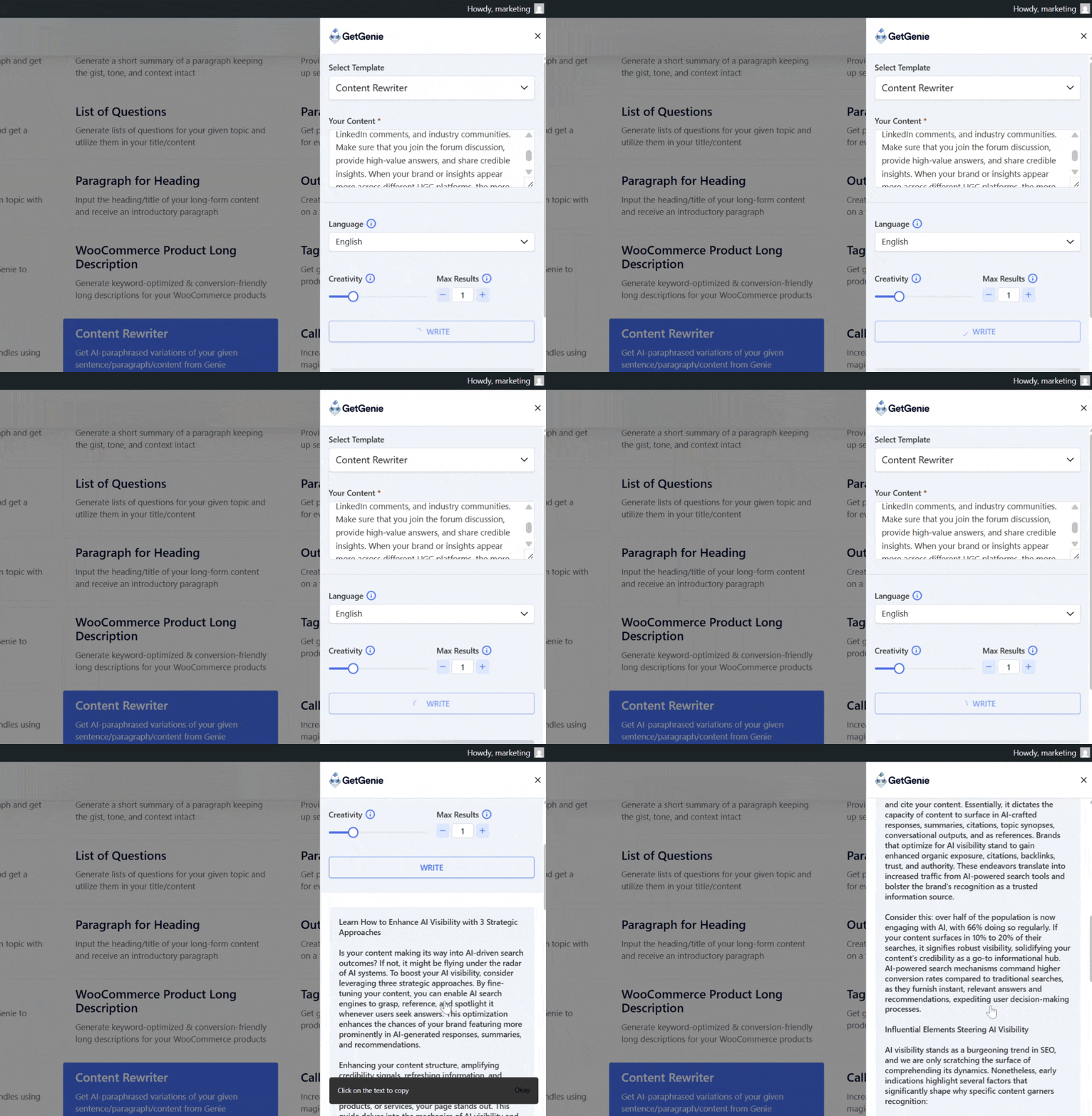
You may also use AI tools like GetGenie. It has a content rewriter template to make your job easy.
3. Incorporate comparisons
Users frequently ask AI to help them choose between options. AI platforms strongly favor comparison content to provide answers to queries asking for options. They were favored because they are easy to summarize, easy to cite, and useful for decision-making.
So, when writing content with comparison, make your comparison clear and well-structured.
For instance, your content is about “Top 5 AI plugins”. When writing its content, make sure that you add a comparison table. This could be a comparison of the 5 AI plugins in feature set, performance, pricing, pros and cons, etc.
4. Write content in a conversational and AI-friendly structure
When writing for content, use correct formatting and provide a concise answer based on the searched term or phrase. Use only simple sentences in a short paragraph that consists of 2-3 sentences, a direct definition, bullet points, clear headings, etc.
Additionally, use different schemas like FAQ, how-to, case study, reviews, etc. Adding a schema can help AI extract the meaning of your content easily. Hence, ensuring a spot as a trusted source of information.
Moreover, don’t write a general or broad topic. For example, instead of writing content for “What is product research?”, write content for a topic like “El D.I.V.E. Method (Discover, Investigate, Validate, Evaluate).”
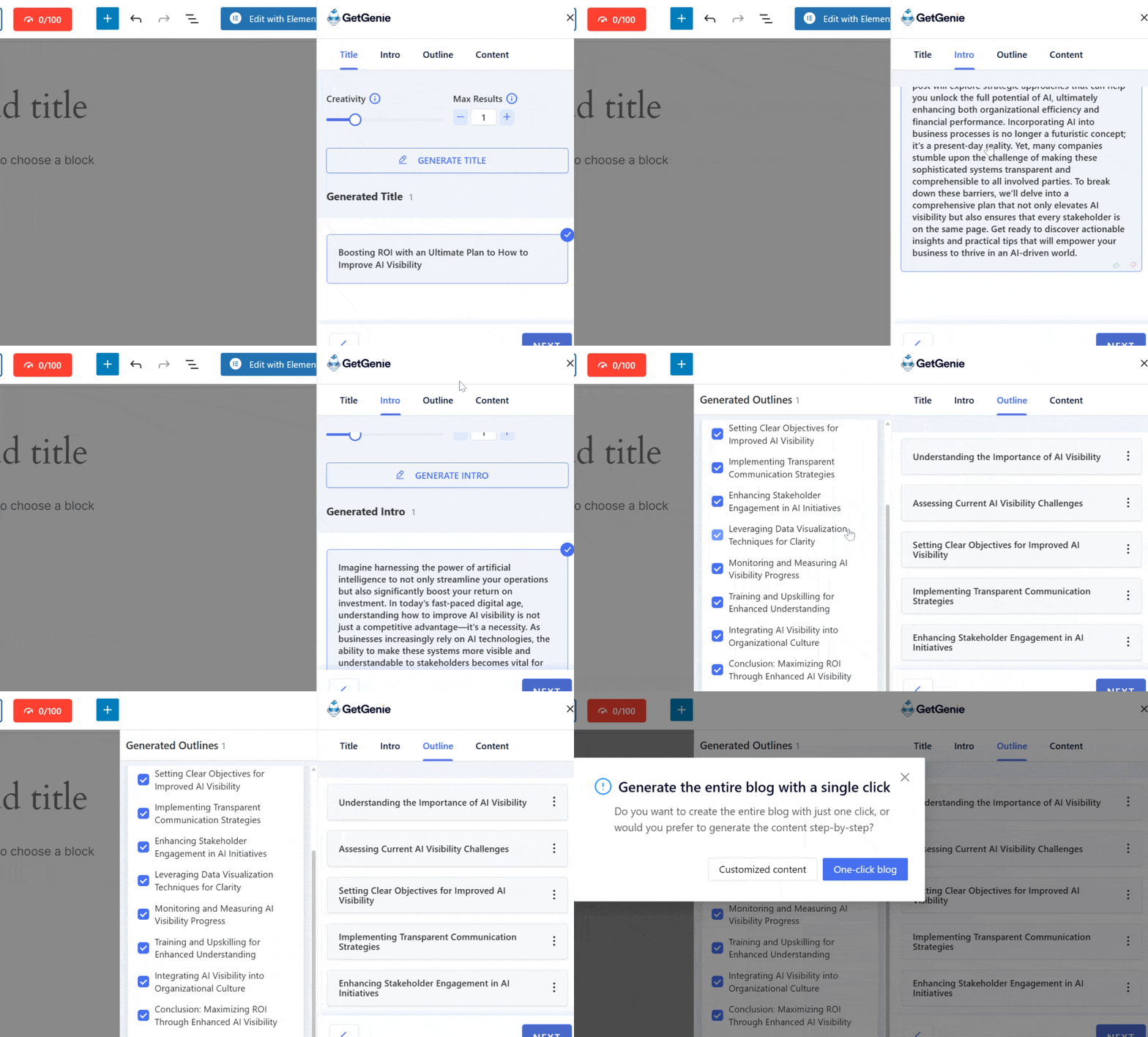
Finally, don’t stress yourself about writing conversational and AI-friendly content using a lengthy process. You can use dedicated AI plugins for content writing, like GetGenie.
5. Build E-E-A-T
Credibility plays a major role in choosing your brand as a source of information in the AI-powered search results. AI highlights content that clearly shows real experience, expertise, authority, and trust.
So, when writing your content, make sure that you include author bios, case studies, real-life experience, testimonials, reviews, citations, and even credentials.
Off-Page Strategies
Off-page SEO helps your content be credible and popular. If AI-powered engines find that your content or brand is popular and credible, they mostly choose your content or brand as a source to trust, summarize, and cite in their generated results.
These are strategies that would help your off-page SEO.
1. Identify citation gaps and fix them
A citation gap is when your competitors are being cited in the AI-powered search results for a certain query, but your content is not.
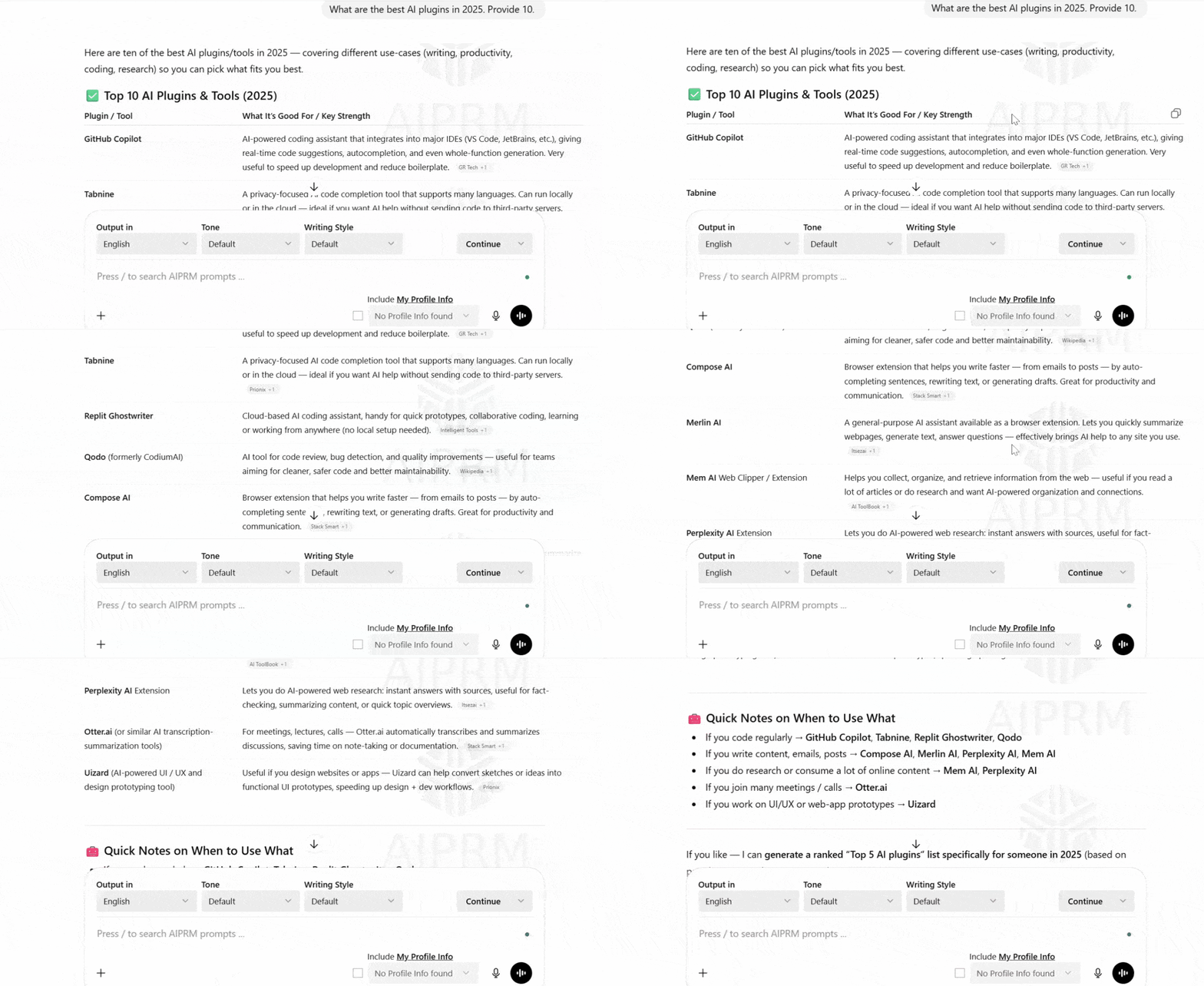
First, pick a topic that is covered on your website and use AI tools like ChatGPT to search for its answers. For example, you can ask AI for the top 10 AI plugins in 2025. If AI does not include or cite your brand as a part of the recommendation in the AI-powered search results, that means your content or brand has a citation gap.
Next, evaluate your content to see if it has these factors:
- Correct formatting
- Direct definitions
- Short sentences and paragraphs with 2-3 sentences
- Bullet points and comparison table
- Clear headings
- Schema mark-up
- E-E-A-T compliance
- Data and statistics
- Up-to-date information
You can also study your competitor’s content and identify the areas that make it unique to be cited. You can create a checklist so that you can easily identify what is missing in your own content.
2. Engage in UGC forums
AI uses large amounts of UGC (user-generated content) for training. It even sources heavily from UGC platforms, like Reddit, Quora, Forums, LinkedIn comments, and industry communities.
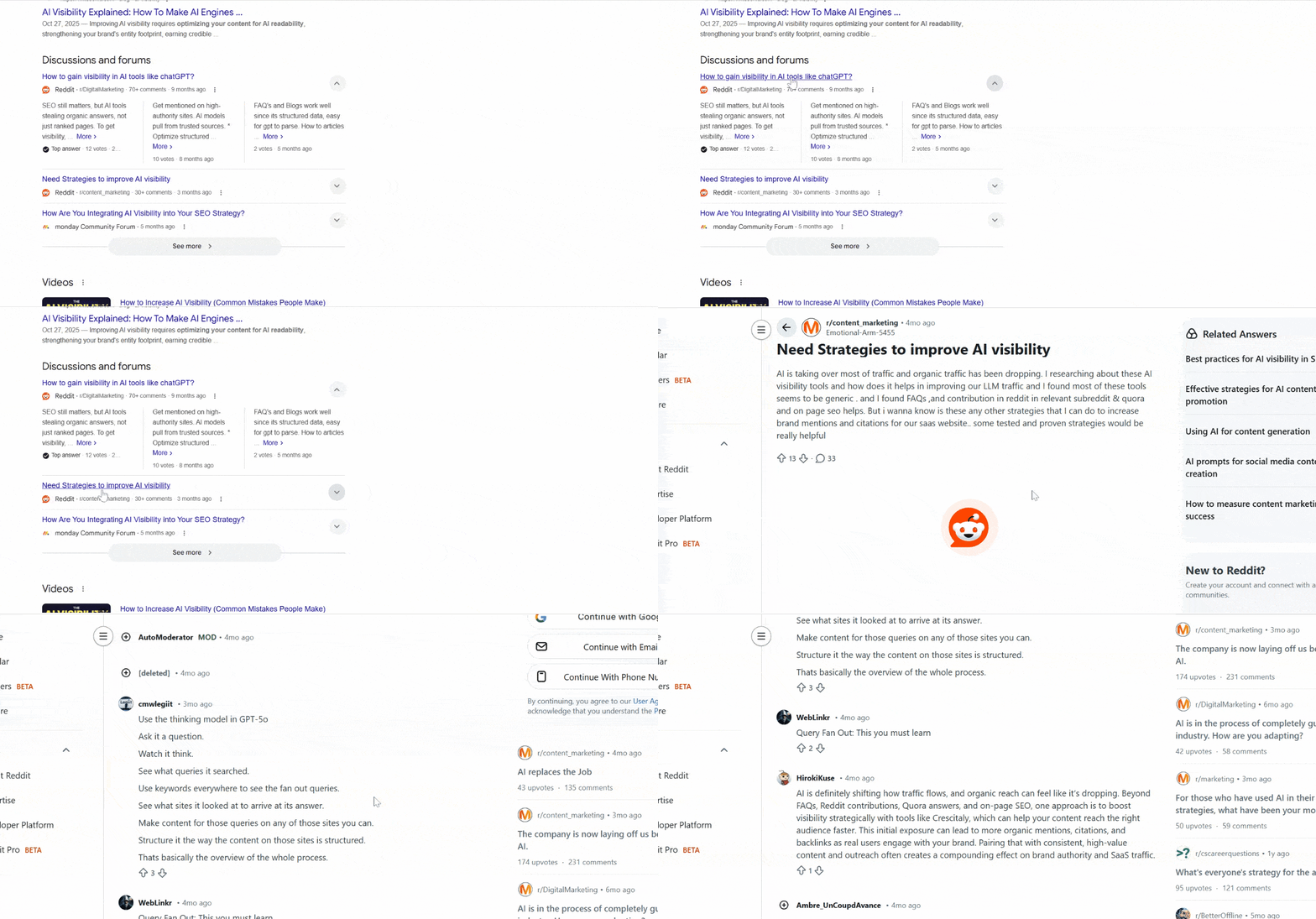
Make sure that you join the forum discussion, provide high-value answers, and share credible insights. When your brand or insights appear more across different UGC platforms, the more chances AI has to pick your brand in its recommendations.
Technical Strategies
Technical SEO gives the go signal to AI models to access, understand your content, and extract information for their AI-powered search results.
1. Resolve robots.txt blocks on AI crawlers
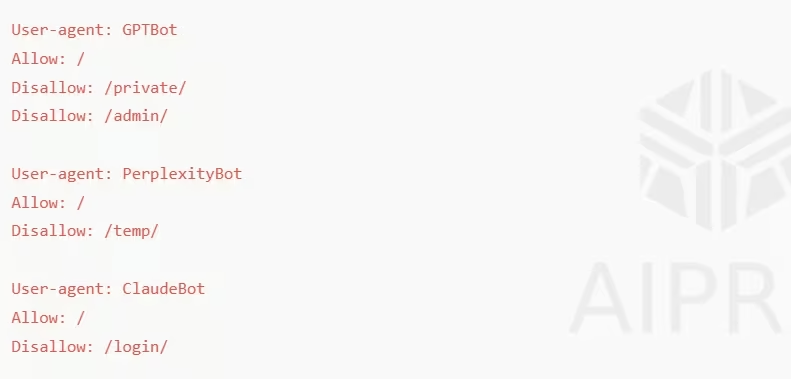
Some sites accidentally block AI crawlers like GPTBot, AnthropicBot, CCBot, and PerplexityBot. When you find them being blocked, allow them so that your content can be indexed for AI search engines.
Open your robots.txt file and check if AI crawlers were blocked. You will know that they were blocked because of the term “Disallow” and change it to “Allow.
2. Fix broken pages
Broken links and 404 pages hurt AI understanding and citation potential. It could be caused by a deleted page, a change in URL, typos in links, and outdated linked content.
You can log in to your Google Search Console account to see which pages are affected by broken links.

You can use a redirection plugin to fix it caused by deleted pages and changes in URL. If the causes are only typos and incorrect linkage, simply update the link anchorage.
3. Avoid heavy JavaScript for primary content
If AI crawlers can’t render JavaScript, your content may be invisible. Even Google may not always render your primary content immediately and fast. It could even fail, resulting in primary content not being indexed.
Additionally, content with heavy JavaScript could be crawled by some AI models, but there’s a chance it will only crawl a blank page or partial page. You can test it using the Google Search Console URL inspection feature to test the live URL. If it shows a blank page, the same result occurs for AI crawlers.
Instead of using heavy JavaScript, you can use server-side rendering (SSR) and static site generation (SSG), or progressive enhancement.
4. Improve website speed and accessibility
Fast, accessible sites are easier for AI crawlers to read and extract. AI models avoid content that cannot load and render fast. To ensure a place in the AI search answers, optimize your website for core web vitals and mobile performance. Use compressed images and GIFs, and even use accessibility tags.
Preguntas frecuentes
1. How is AI visibility different from SEO?
SEO targets search engines, while AI visibility targets AI models used for answers, summaries, and citations.
2. Does AI visibility replace SEO?
No, they work together. SEO helps search rankings, while AI visibility boosts citation and conversational exposure.
3. How long does it take to improve AI visibility?
Usually 3–6 months, depending on your update velocity and authority.
4. Do backlinks influence AI visibility?
Yes! Backlinks from authoritative sites increase trust signals for AI systems.
Final Thought
AI visibility is now the main character in digital discoverability. AI tools have become the primary gateway for online information. You don’t have an option but to comply with the trend if you still want to be in the first line of competition.
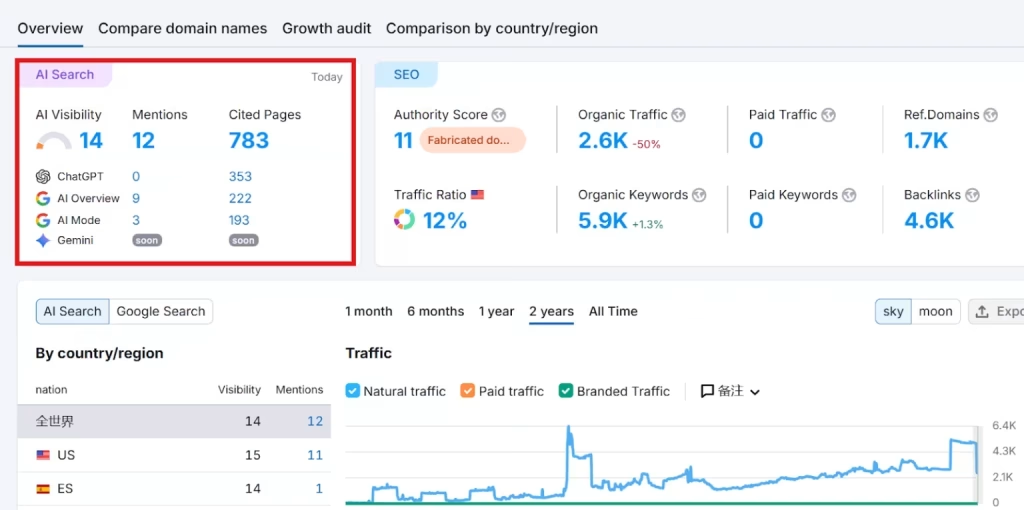
Check your visibility score with the use of AI tools like Semrush to see how you are performing for AI visibility. Then, apply the on-page, off-page, and technical strategies to improve your visibility and position your brand as a trusted and frequently cited authority across AI-generated content.
Start optimizing today! Not just for search engines, but for the future of search itself.

 Danish
  Swedish
  Polish
  Korean